18+ · Research use only

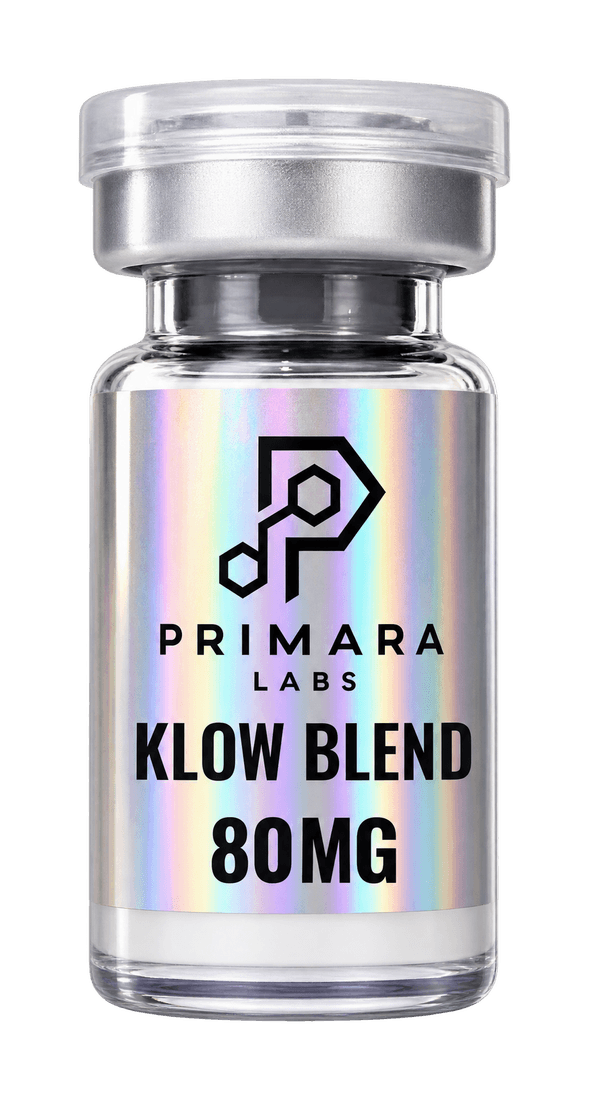
KLOW Blend 80mg, Philippines
Research blend; the blend itself has not been studied. Lyophilized powder, stocked in Metro Manila. For laboratory research use only.
Choose a pack
Pack price replaces the 10% off. One compound per pack.
Pack price replaces the standing 10% off; they don't stack. One compound per pack.
Check out once for the whole cart. Pay by QR, confirm on WhatsApp.
Add more compounds if you like, then check out once. You pay by QR on your order page and send the screenshot on WhatsApp.
In the Philippines



GCash · Maya · QR Ph bank transfer · InstaPay
From abroad

- International transfer



Wise · International bank transfer · Zelle · Crypto
Payment details are sent in the WhatsApp chat once your order is confirmed.
Order by 12 noon on a weekday for same-day Metro Manila
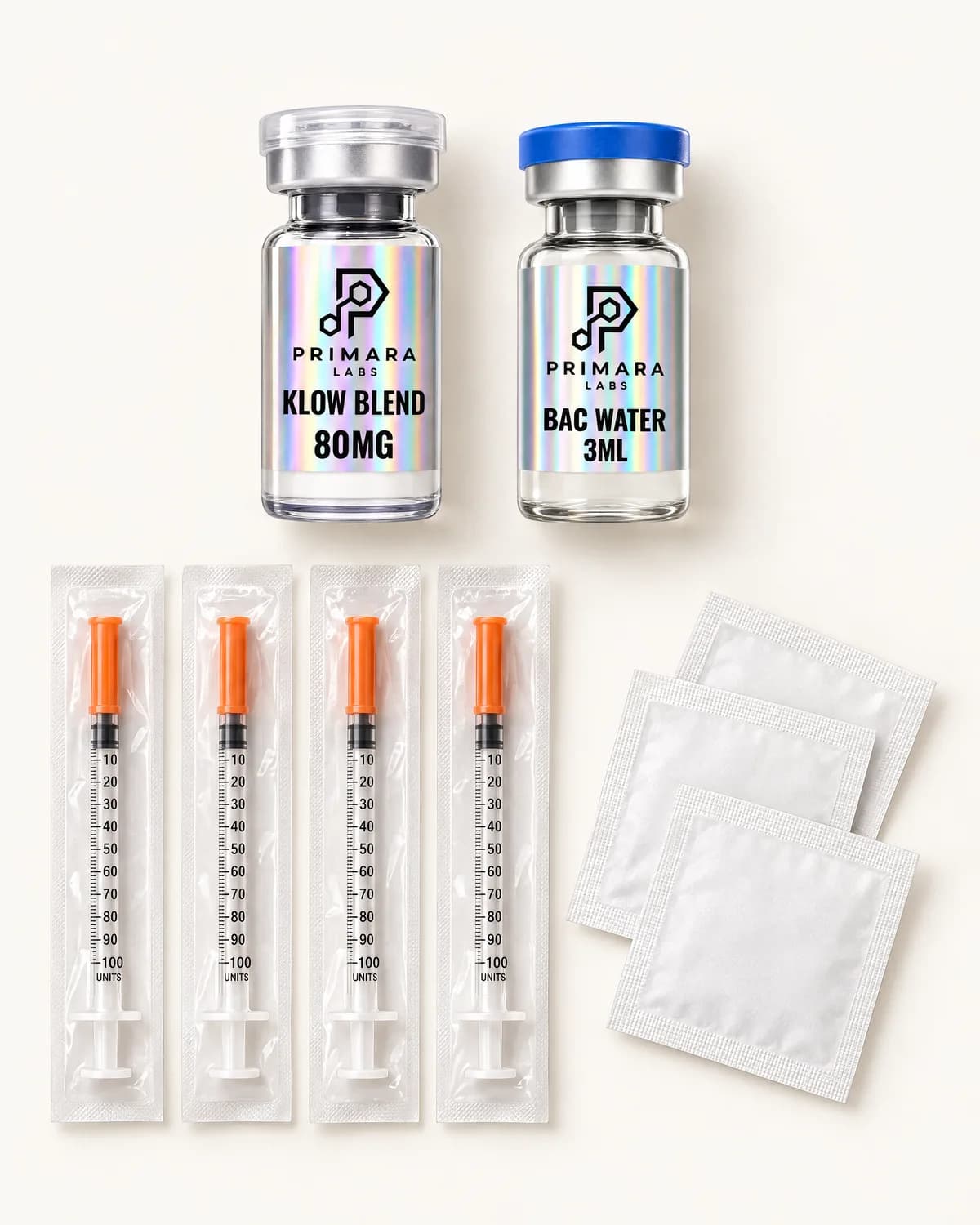
Includes water, syringes, pads · plain box
60-day money-back guaranteeTerms
Order by 12 noon on a weekday for same-day delivery in Metro Manila
Free courier nationwide · Luzon 1-2 days · Visayas 2-3 days · Mindanao 3-5 days
Everything to reconstitute is included
5 x 3ml water · 50 syringes · 50 pads · plain outer packaging
60-day money-back guarantee
If an accredited independent laboratory reports that this vial is not the compound on the label, we refund what you paid for it. Evidence within 60 calendar days of delivery; you do not send anything back. Terms
Updated 12 October 2026
- Human evidence
- Small human studies
- Manufacturing
- cGMP · ISO 9001 · ISO 13485
- Latest batch report
- Report pending
- Storage
- 2 to 8 °C sealed
KLOW Blend in the Philippines
KLOW Blend is the GLOW combination with KPV added: KPV at 10mg, GHK-Cu at 50mg, BPC-157 at 10mg and TB-500 at 10mg, for 80mg total across four peptides.
KPV is the tripeptide tail of alpha-MSH and is the component that separates this blend from GLOW. Its published research sits on inflammatory signalling rather than on structural repair, which is why the two blends are studied under different headings even though three of the four components are shared.
KLOW is the 80mg blend: the three GLOW peptides with KPV added, freeze-dried together in one vial. Store it in the fridge, sealed and away from light, and keep it cold after mixing. The order is placed in WhatsApp from the button above, and the reply covers availability, the peso total and same-day Metro Manila delivery on orders confirmed before 12 noon. KPV is the part that sets KLOW apart; read the KPV guide for the research on it.
Regulatory status
BPC-157
TB-500
GHK-Cu
KPV
BPC-157. FDA Philippines: not established. US FDA: No record found. Checked 23 September 2026. TB-500. FDA Philippines: not established. US FDA: No record found. Checked 23 September 2026. GHK-Cu. FDA Philippines: not established. US FDA: No record found. Checked 23 September 2026. KPV. FDA Philippines: not established. US FDA: No record found. Checked 23 September 2026.
Sold for laboratory research only, not for human consumption. Primara Labs does not give medical advice or dosing guidance. Regulatory Status Tracker
Laboratory handling
Reconstitution reference
| BAC water added | Resulting concentration | Note |
|---|---|---|
| 2.0 ml | 40 mg/ml total | Highest concentration, smallest volumes |
| 5.0 ml | 16 mg/ml total | Common reference dilution |
Reconstitute with bacteriostatic water. Reference values are for laboratory preparation only. Other volumes: reconstitution calculator, prefilled for KLOW Blend 80mg.
Handling and storage
Sealed vials
Store sealed lyophilised vials refrigerated at 2 to 8 °C, away from light.
Primara Labs storage instructionAdding diluent
Add the diluent slowly down the inside wall of the vial rather than straight onto the powder.
Mixing
The US prescribing instructions for tesamorelin, a lyophilised peptide medicine, tell users to swirl the vial to mix the powder and liquid, and not to shake it.
Tesamorelin US instructions for use, DailyMed · checked 23 September 2026Appearance
The same instructions say not to use the solution if it is cloudy, discoloured or has particles in it.
Tesamorelin US instructions for use, DailyMed · checked 23 September 2026After the stopper is punctured
CDC guidance, citing USP chapter 797, is that a multi-dose vial once opened is dated and discarded within 28 days unless the manufacturer states another date, and never used past its original expiry.
CDC, Preventing Unsafe Injection Practices · checked 23 September 2026The KLOW Blend itself has not been studied. The findings below are for each component on its own.
Benefits studied: BPC-157
Interstitial cystitis symptoms
Small human studiesIn an uncontrolled pilot of 12 women with interstitial cystitis, 10 reported complete symptom resolution; there was no placebo or comparison group.
PubMed 39325560 · checked 23 September 2026Knee pain
Small human studiesIn a retrospective phone survey of 16 clinic patients, 14 reported knee pain relief; there was no control group and no validated outcome measure.
PubMed 34324435 · checked 23 September 2026Tendon repair
Animal and cellIn rats with a cut Achilles tendon, BPC-157 improved mechanical, functional and microscopic healing measures compared with saline.
J Orthop Res 2003 · checked 23 September 2026Ligament repair
Animal and cellIn rats with a surgically cut knee ligament, BPC-157 improved functional, mechanical and tissue measures of healing over 90 days.
J Orthop Res 2010 · checked 23 September 2026
Side effects reported: BPC-157
The two small uncontrolled pilots, of 2 and 12 people, reported no adverse events. A 2025 systematic review states that no clinical safety data were found.
HSS J 2025 (systematic review) · checked 23 September 2026No human adverse event data published.
Europe PMC and ClinicalTrials.gov search, 23 September 2026 · checked 23 September 2026Benefits studied: TB-500
Skin wound repair
Animal and cellIn aged and diabetic mice, the seven-amino-acid thymosin beta-4 fragment LKKTETQ promoted skin wound repair about as well as the full-length protein.
Wound Repair Regen 2003 · checked 23 September 2026Cell wound closure
Animal and cellIn a cell scratch-wound test, the TB-500 breakdown product Ac-LKKTE showed wound-healing activity, while TB-500 itself did not.
J Chromatogr B 2024 · checked 23 September 2026
Side effects reported: TB-500
No human adverse event data exist for TB-500. In the phase 3 trial of full-length thymosin beta-4 eye drops (ARISE-3), a different molecule, instillation site pain occurred in 6.6% against 4.6% on placebo.
ClinicalTrials.gov NCT03937882 results · checked 23 September 2026No human adverse event data published.
Europe PMC and ClinicalTrials.gov search, 23 September 2026 · checked 23 September 2026Benefits studied: GHK-Cu
Diabetic foot ulcer closure
Small human studiesIn a randomised, evaluator-blinded, placebo-controlled trial of a GHK-Cu gel on diabetic foot ulcers, median ulcer closure was 98.5% with the gel against 60.8% with the inactive gel; the abstract does not state the trial's size or phase.
Wound Repair Regen 1994 · checked 23 September 2026Skin after laser resurfacing (no measured benefit)
Small human studiesIn 13 randomised patients after laser skin resurfacing, GHK-Cu skin care made no measurable difference to redness, wrinkles or blinded ratings, though patients rated their skin quality higher.
Arch Facial Plast Surg 2006 · checked 23 September 2026Ligament graft healing
Animal and cellIn rats after knee ligament reconstruction, GHK-Cu reduced knee laxity at 6 weeks, but the difference had gone by 12 weeks.
J Orthop Res 2015 · checked 23 September 2026Fibroblast growth
Animal and cellIn cell culture, GHK-Cu shortened the doubling time of normal and irradiated human skin fibroblasts and raised their early output of growth factors.
Arch Facial Plast Surg 2005 · checked 23 September 2026
Side effects reported: GHK-Cu
No human adverse event data published.
Europe PMC and ClinicalTrials.gov search, 23 September 2026 · checked 23 September 2026Benefits studied: KPV
Colitis
Animal and cellIn mice with chemically induced colitis, KPV reduced colitis and inflammatory cytokine expression.
Gastroenterology 2008 · checked 23 September 2026Recovery from colitis
Animal and cellIn two mouse colitis models, KPV-treated mice recovered earlier and regained more body weight, with less inflammatory infiltrate.
Inflamm Bowel Dis 2008 · checked 23 September 2026Colitis-associated tumours
Animal and cellIn mice with colitis-associated cancer, KPV prevented tumour formation; it had no effect in mice lacking the PepT1 transporter.
Cell Mol Gastroenterol Hepatol 2016 · checked 23 September 2026Oral mucositis
Animal and cellIn rats with chemotherapy-induced mouth ulcers, KPV in an adhesive gel improved food intake and body-weight recovery.
Biomater Sci 2022 · checked 23 September 2026
Side effects reported: KPV
No human adverse event data published.
Europe PMC and ClinicalTrials.gov search, 23 September 2026 · checked 23 September 2026Findings are described as the research reported them, with the level of evidence for each. They are not a claim about any vial sold here, which is supplied for laboratory research use only.
How it works
BPC-157
BPC-157 is a synthetic 15-amino-acid peptide. A 2025 systematic review summarises animal and cell studies as showing raised growth hormone receptor expression, activation of pathways for cell growth and new blood vessel formation, and lower inflammatory signalling. No receptor has been identified, and the same review notes it is broken down quickly in the liver. None of these mechanisms has been shown in people.
Targets: No defined receptor; pathways proposed from animal and cell work
TB-500
Thymosin beta-4 is a 43-amino-acid protein and the main actin-sequestering molecule in cells. Its central actin-binding sequence, LKKTETQ, is reported to promote cell migration, new blood vessel growth and wound healing, and TB-500 is described in the analytical literature as the acetylated form of that fragment. A 2024 cell study found the wound-healing activity came from a TB-500 breakdown product rather than TB-500 itself.
Targets: Actin binding (the LKKTETQ sequence of thymosin beta-4)
GHK-Cu
GHK is a tripeptide (glycine, histidine, lysine) found in human plasma, saliva and urine, and it binds copper. In laboratory work it stimulates both the production and the breakdown of collagen and related skin matrix molecules, and adjusts the enzymes that remodel tissue. The evidence for these actions comes from cell and animal studies.
Targets: Copper binding; tissue remodelling enzymes (from cell and animal work)
KPV
KPV is the last three amino acids of alpha-melanocyte-stimulating hormone. In cell studies it enters intestinal and immune cells through the peptide transporter PepT1 and dampens NF-kB and MAP kinase inflammatory signalling. A mouse study found its anti-inflammatory effect is unlikely to act through melanocortin receptors.
Targets: PepT1 transporter uptake; NF-kB and MAP kinase inflammatory signalling (cell work)
What the research shows
BPC-157
BPC-157 has no completed human randomised controlled trial. Its human data are three small uncontrolled reports of 2 to 16 people, and a 2025 systematic review found no clinical safety data. Almost all of its literature is rat work on tendon, ligament and gut healing.
Animal and cell Animal and cell studies only. BPC-157 has been studied mostly in rats, in models of tendon, ligament, muscle and gut injury.
- In rats with a cut Achilles tendon, BPC-157 improved load to failure, function and tissue appearance compared with saline. J Orthop Res 2003 · checked 23 September 2026
- In rats with a surgically cut knee ligament, BPC-157 improved functional, mechanical and tissue measures of healing over 90 days. J Orthop Res 2010 · checked 23 September 2026
- In rats with restricted then restored blood flow to the hind limb, BPC-157 lowered markers of oxidative stress and cell death. Sci Rep 2026 · checked 23 September 2026
TB-500
No human trial of TB-500, the acetylated thymosin beta-4 fragment Ac-LKKTETQ, has reported; its evidence is animal and cell work. Full-length thymosin beta-4 has been studied in people, mostly as eye drops, where two phase 3 dry-eye trials posted near-identical results in both arms. A 2024 cell study found the wound-healing activity came from a TB-500 breakdown product rather than TB-500 itself.
Animal and cell Animal and cell studies only for TB-500. Human trials exist for full-length thymosin beta-4, a different molecule, mostly as eye drops; see the Evidence Map.
- In aged and diabetic mice, the seven-amino-acid fragment LKKTETQ promoted skin wound repair about as well as full-length thymosin beta-4. Wound Repair Regen 2003 · checked 23 September 2026
- In a cell scratch-wound test, only the TB-500 breakdown product Ac-LKKTE showed wound-healing activity, not TB-500 itself. J Chromatogr B 2024 · checked 23 September 2026
- A rat Achilles tendon repair study described its molecule as synthetic thymosin beta-4 (TB-500) without stating the sequence in the abstract. Jt Dis Relat Surg 2026 · checked 23 September 2026
GHK-Cu
GHK-Cu is a copper-binding tripeptide found in human plasma. Its human evidence is two small topical trials, one in diabetic foot ulcers from 1994 and one after laser skin resurfacing that found no objective benefit; a 2025 review notes a surprising absence of clinical studies. Most of its literature is cell and animal work.
Animal and cell Mostly cell and animal work. The two human trials found are small and topical.
- In rats after knee ligament reconstruction, GHK-Cu reduced knee laxity at 6 weeks; the difference had gone by 12 weeks. J Orthop Res 2015 · checked 23 September 2026
- In an irradiated rat wound model, topical GHK-Cu showed no benefit. Otolaryngol Head Neck Surg 2013 · checked 23 September 2026
- In cell culture, GHK-Cu shortened the doubling time of normal and irradiated human skin fibroblasts. Arch Facial Plast Surg 2005 · checked 23 September 2026
KPV
KPV is the three-amino-acid tail (Lys-Pro-Val) of alpha-melanocyte-stimulating hormone. It has never been given to people in a published study; its evidence is mouse, rat and cell work, mostly in colitis models.
Animal and cell Animal and cell studies only; KPV has not been given to people in a published study.
- In mice with chemically induced colitis, KPV reduced colitis and inflammatory cytokine expression. Gastroenterology 2008 · checked 23 September 2026
- In two mouse colitis models, KPV-treated mice recovered earlier with less inflammatory infiltrate. Inflamm Bowel Dis 2008 · checked 23 September 2026
- In mice with induced peritonitis, KPV reduced the inflammatory response. J Pharmacol Exp Ther 2003 · checked 23 September 2026
The first published batch report is retatrutide 20mg batch RETA-4728-A, Janoshik-tested for bacterial endotoxin (key H2KI86I8GWB4), at primaralabs.com/coa. Reports for further compounds are published there per batch as they are issued.
BPC-157
- Type
- Synthetic pentadecapeptide
- Molecular formula
- C62H98N16O22
- Molecular weight
- 1,419.5 g/mol
- CAS
- 137525-51-0
- PubChem
- CID 9941957
- Sequence
- GEPPPGKPADDAGLV
TB-500
- Type
- Thymosin beta-4 related peptide
The catalogue listed the full 43-residue thymosin beta-4 sequence under the name TB-500, while the analytical literature identifies TB-500 as the fragment Ac-LKKTETQ, and the catalogue's formula matched neither PubChem record. Identity fields are withheld until the supplier confirms which molecule the vial contains.
GHK-Cu
- Type
- Copper-binding tripeptide
- Sequence
- Gly-His-Lys, as a copper complex
PubChem records the GHK-copper complex under several formulas, so formula, weight and CAS are not published for the complex. The free tripeptide GHK is PubChem CID 73587.
KPV
- Type
- Tripeptide (alpha-MSH 11-13)
- Molecular formula
- C16H30N4O4
- Molecular weight
- 342.43 g/mol
- CAS
- 67727-97-3
- PubChem
- CID 125672
- Sequence
- Lys-Pro-Val
- Presentation
- Lyophilized powder, KPV 10 mg + GHK-Cu 50 mg + BPC-157 10 mg + TB-500 10 mg / vial
- Vial size
- 80mg
- Catalogue code
- PRM-017



Frequently asked
KLOW Blend questions, answered
How much is KLOW Blend in the Philippines?
At Primara Labs, KLOW Blend 80mg is ₱3,990 for a single vial, ₱3,323 per vial in a 5 pack (₱16,615 total) and ₱2,437 per vial in a 10 pack (₱24,370 total). Prices are in pesos and the pack price is shown on the product page before you order.
Where can I buy KLOW Blend in the Philippines?
Primara Labs keeps KLOW Blend 80mg in stock in Metro Manila cold storage. Order on WhatsApp from the product page: the message is typed for you, and stock, the total and delivery are confirmed in the chat. There is no on-site checkout.
Do you deliver KLOW Blend to Cebu, Davao and the provinces?
Yes. Metro Manila: same day before 12 noon, Grab Express / Lalamove, ₱150; Luzon: 1 to 2 business days, J&T Express, ₱250; Visayas: 2 to 3 business days, J&T Express, ₱250; Mindanao: 3 to 5 business days, J&T Express, ₱300. Cebu is in the Visayas and Davao in Mindanao. Courier is free on orders over ₱10,000 anywhere in the Philippines. Below that, a Metro Manila rider is ₱150, J&T Express is ₱250 to Luzon and the Visayas and ₱300 to Mindanao.
Is KLOW Blend FDA approved in the Philippines?
BPC-157. FDA Philippines: not established. US FDA: No record found. Checked 23 September 2026. TB-500. FDA Philippines: not established. US FDA: No record found. Checked 23 September 2026. GHK-Cu. FDA Philippines: not established. US FDA: No record found. Checked 23 September 2026. KPV. FDA Philippines: not established. US FDA: No record found. Checked 23 September 2026. Primara Labs supplies it for research use only; it is not for human consumption.
What is the difference between KLOW and GLOW?
KLOW is the GLOW combination with KPV 10mg added, for 80mg total across four peptides instead of 70mg across three. KPV is studied for inflammatory pathway signalling rather than structural repair.
Is the combination itself studied?
No. Each of the four components has its own published research, but no work studies them together in this ratio. The blend combines four components in one vial.
What is BPC-157 studied for?
BPC-157 has no completed human randomised controlled trial. Its human data are three small uncontrolled reports of 2 to 16 people, and a 2025 systematic review found no clinical safety data. Almost all of its literature is rat work on tendon, ligament and gut healing.
What is TB-500 studied for?
No human trial of TB-500, the acetylated thymosin beta-4 fragment Ac-LKKTETQ, has reported; its evidence is animal and cell work. Full-length thymosin beta-4 has been studied in people, mostly as eye drops, where two phase 3 dry-eye trials posted near-identical results in both arms. A 2024 cell study found the wound-healing activity came from a TB-500 breakdown product rather than TB-500 itself.
What is GHK-Cu studied for?
GHK-Cu is a copper-binding tripeptide found in human plasma. Its human evidence is two small topical trials, one in diabetic foot ulcers from 1994 and one after laser skin resurfacing that found no objective benefit; a 2025 review notes a surprising absence of clinical studies. Most of its literature is cell and animal work.
What is KPV studied for?
KPV is the three-amino-acid tail (Lys-Pro-Val) of alpha-melanocyte-stimulating hormone. It has never been given to people in a published study; its evidence is mouse, rat and cell work, mostly in colitis models.
What side effects were reported for the KLOW Blend components?
BPC-157: The two small uncontrolled pilots, of 2 and 12 people, reported no adverse events. A 2025 systematic review states that no clinical safety data were found. TB-500: No human adverse event data exist for TB-500. In the phase 3 trial of full-length thymosin beta-4 eye drops (ARISE-3), a different molecule, instillation site pain occurred in 6.6% against 4.6% on placebo. GHK-Cu: No human adverse event data published (Europe PMC and ClinicalTrials.gov search, 23 September 2026). KPV: No human adverse event data published (Europe PMC and ClinicalTrials.gov search, 23 September 2026).
How should KLOW Blend be stored?
Store sealed lyophilised vials refrigerated at 2 to 8 °C, away from light. CDC guidance, citing USP chapter 797, is that a multi-dose vial once opened is dated and discarded within 28 days unless the manufacturer states another date, and never used past its original expiry.
Does Primara Labs publish lab reports for KLOW Blend?
The first published batch report is retatrutide 20mg batch RETA-4728-A, Janoshik-tested for bacterial endotoxin (key H2KI86I8GWB4), at primaralabs.com/coa. Reports for further compounds are published there per batch as they are issued.
Answers
Questions about KLOW Blend, answered
All compounds supplied by Primara Labs are for laboratory research use only and are not for human consumption, diagnostic or therapeutic use. Statements on this page describe published research and have not been evaluated by the Philippine FDA. See Research Use Only terms.